Same-Game Parlay for MLB — How Bet Builders Work in Baseball
 Available in US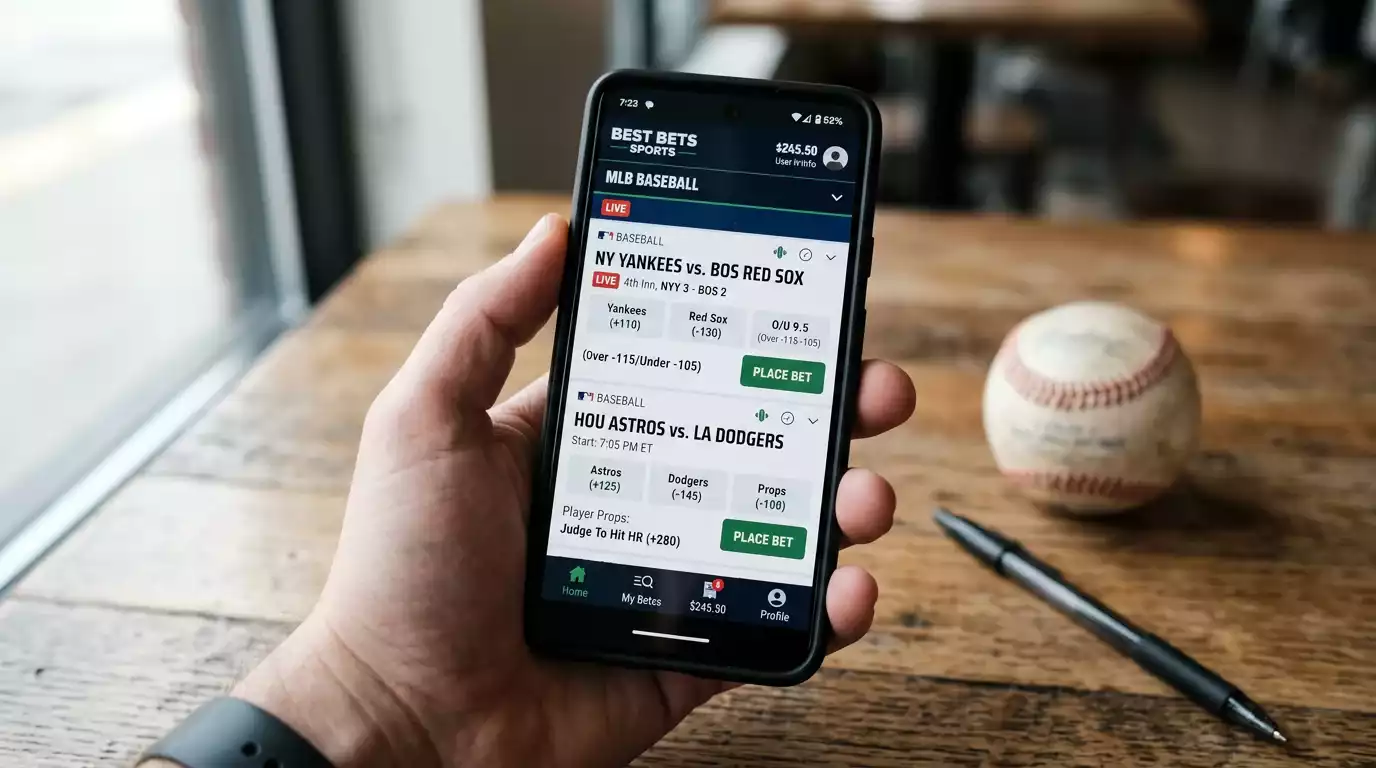
The same-game parlay changed how sportsbooks make money, and I mean that literally. Before bet builders existed, if you wanted to combine a moneyline with a strikeout prop and a total from the same game, the bookmaker would reject it because the outcomes were correlated. Now they price that correlation into the odds and let you build it yourself. The product is slick, the interface is addictive, and the margins are significantly higher than anything you will find on a straight bet.
In the UK market, same-game parlays — also called bet builders or single-game multis — have become a flagship product. With 78% of global sports bets placed from mobile devices, the bet builder interface is designed for exactly that experience: tap a few selections, watch the combined odds update in real time, and place the bet in seconds. For MLB, where a single game generates dozens of player-level markets, the SGP menu is deep and the combinations are virtually limitless.
How Same-Game Parlays Work
I built my first MLB same-game parlay on a whim: moneyline favourite, under 9.5 total, starting pitcher over 6.5 strikeouts. The combined decimal odds came to 5.40. All three legs won. The payout felt like a revelation — until I started calculating what those same selections would have returned as individual bets and realised the SGP had paid less than a standard three-leg accumulator of uncorrelated events at equivalent odds would have.
That is the mechanics in a nutshell. A same-game parlay lets you combine multiple selections from one game into a single bet, but the bookmaker adjusts the combined price to account for the correlation between legs. If you bet on Team A to win and the game to go under the total, those outcomes are positively correlated — a strong pitching performance drives both. In a standard parlay of independent events, the individual odds would simply multiply. In an SGP, the bookmaker reduces the combined price to reflect the fact that the legs are not independent, and then adds their margin on top.
The result is a product that looks like a bargain but carries a higher effective margin than a standard parlay. I have reverse-engineered the implied probabilities on dozens of MLB SGPs and consistently found margins in the 10-15% range, compared to 4-6% on a standard three-leg accumulator of independent events. That gap is the price of convenience and correlation.
Leg Correlation and Risk
Understanding which legs are correlated — and how the bookmaker prices that correlation — is the single most important skill in SGP betting. Get it wrong, and you are paying a premium for combinations that the bookmaker has already adjusted against you. Get it right, and you can occasionally find SGPs where the correlation adjustment is too aggressive, leaving value on the table.
The UK online gambling market reached 9 billion dollars in 2025, and same-game parlays are a growing share of that revenue precisely because most bettors do not engage with the correlation maths. They see an appealing combination, like the odds, and place the bet. The bookmaker’s algorithm has already done the hard work of pricing the relationships between legs, and it almost always errs in the house’s favour.
Positive correlation pairs to watch for in MLB: team moneyline and their starting pitcher’s strikeout over (a dominant pitching performance drives both); game under and a low team total (same mechanism); batter hit over and team moneyline (productive offence drives both). Negative correlation pairs: team moneyline and game over (a blowout often pushes the total up, but a close win might not); batter strikeout over and batter hit over (contradictory outcomes for the same player).
The legs I avoid in SGPs are high-variance player props like home run bets and exact-score outcomes. These carry enormous uncertainty, the pricing is aggressive, and they introduce the kind of randomness that undermines any analytical edge you might have on the other legs. A home run prop in an SGP is the bookmaker’s best friend. For more on how individual MLB prop markets work and where to find value, our dedicated prop betting guide goes deeper on the player-level analysis.
UK Availability and Operator Differences
Same-game parlays are not created equally across UK sportsbooks, and this was something I had to learn through trial and error. Some operators allow you to combine five or six legs from a single MLB game, while others cap at three or four. Some include batter props alongside pitcher props and game-level markets, while others restrict SGPs to a subset of available markets.
The bet builder interface itself varies considerably. At the better operators, the tool shows you the correlation impact in real time — you can see the combined odds shift as you add or remove legs, which gives you at least a rough sense of how much the bookmaker is adjusting for correlation. At others, the combined price appears only after you have finalised your selections, making it harder to iterate and optimise.
One practical tip: build the same SGP at two or three different sportsbooks before placing it. The pricing can differ by 10-20% for identical combinations, because each operator uses a different correlation model and a different margin structure. That kind of price discrepancy would be unusual on a standard moneyline, but it is common in the SGP market because the product is complex and the algorithms are proprietary.
Same-game parlays are here to stay. They are engaging, they suit mobile betting perfectly, and they give bettors a way to express nuanced opinions about a single game. Just go in with clear eyes about the margin you are paying. If the combined odds on your SGP feel generous, they almost certainly are not — the bookmaker has already accounted for the correlation and built in a cushion. Use SGPs selectively, understand the leg relationships, and never let the slick interface distract you from the underlying maths.
Do UK sportsbooks limit same-game parlays for MLB?
Policies vary by operator. Some UK sportsbooks allow up to five or six legs in an MLB same-game parlay, while others restrict the maximum to three or four. The available market types also differ — certain operators include batter props and game-level markets in their bet builder, while others limit the menu to a narrower set of selections. Checking the SGP rules at your specific sportsbook before building a combination is essential.
How does the margin on an SGP compare to a standard parlay?
Same-game parlays carry a significantly higher effective margin than standard accumulators. A typical three-leg MLB SGP has an implied margin in the range of 10-15%, compared to roughly 4-6% on a three-leg standard parlay of independent events. The additional cost reflects the bookmaker’s correlation adjustment plus their margin on each individual leg, compounded across the combination.
Written by the editors at Online Baseball Betting.